WordPress website design

WordPress is the world’s most popular website platform, powering over 40% of all websites. As a content management system (CMS), it allows users to create and manage websites without coding. With a 63% market share among CMS-based sites, it’s widely trusted for businesses, blogs and online stores. Its flexibility, vast plugin library and strong support community make it an ideal choice for millions worldwide.

Your WordPress website design

Our WordPress website design process.

The primary objective of your WordPress website project is to create a bespoke solution that you and your team can easily keep up to date. The website needs to represent your business and highlight its unique selling points (USPs). All of our design decisions are based on thorough research, strategic planning combined with your unique insights.

Our WordPress web design and development process follows a proven process, but what sets us apart is our flexibility. While many agencies stick rigidly to their frameworks, we treat ours as a guideline, allowing us to revisit earlier stages if we see opportunities for improvement. 

Web design process 1 - Discovery workshop

1. Discovery workshop

In the Discovery Workshop, we dive deep into your business to fully understand its unique needs. We’ll discuss your team, operations, company history, customers, and goals, as well as your likes and dislikes. Together, we’ll evaluate your current website and analyse your competitors to uncover opportunities for growth and differentiation.
Web design process 2 - Existing website audit

2. Website audit

Our comprehensive website audit examines every critical aspect of your current site. From SEO performance and user experience to traffic, page speed, and conversion rates, we identify strengths and areas for improvement. This ensures your new website is built on a foundation of clear, actionable insights.
Web design process 3 - Competitor research

3. Competitor research

We conduct an in-depth review of your competitors’ online presence, including their websites, social media strategies, and visibility on search engines and other digital platforms. This analysis helps identify opportunities to set your business apart and create a stronger online presence.

Web design process 4 - Agreeing key performance indicators

4. Agree KPIs

To position your business effectively online, we work collaboratively to define clear goals for your project. We’ll plan the structure, content, and design of your new website while setting measurable KPIs to track success and ensure the project delivers meaningful results.

Web design process 5 - Website specifications and sitemap

5. Specifications & sitemap

We will write a detailed Website Specification to include: sitemap, content structure, page layout, site architecture, customer journey, and calls to action. It serves as a roadmap for the entire project, and you’ll have the chance to review and refine it to ensure it meets your exact requirements.

Web design process 6 - Project management

6. Project management

Your project will be overseen by a dedicated expert from our design and development team. Using Monday.com, we’ll break the project into manageable deliverables aligned with the Website Specification. This ensures a smooth, organised workflow and keeps you informed every step of the way.

Web design process 7 - Website prototyping

7. Website prototype

We begin by creating a prototype of the main navigation and homepage including the header and footer to illustrate the overall direction. Generally we present this as a working prototype so that you can get a better feel for the mobile responsiveness and how the website will flow through the planned sitemap.
Web design process 8 - Website design

8. Website design

Upon approval of the homepage design, we will proceed to design the full website with all inner pages and mobile versions. We may use draft or dummy content at this stage, we will discuss with you the best cause of action.
Web design process 9 - Website build

9. Website build

Our development process begins with a blank canvas, refining every element to deliver a clean, standard-compliant solution. This approach ensures the website meets Google’s requirements for page speed and mobile optimisation. SEO-friendliness, GDPR compliance with a cookie popup, and fast-loading pages are prioritised to create a high-performing, user-focused website.


Managing your content with WordPress.

WordPress is easy to use, even for beginners. Its intuitive dashboard lets you create pages, add images, and edit content effortlessly. The block editor allows drag-and-drop design, while themes change your site’s look instantly. Plugins add features like contact forms and SEO tools, making WordPress perfect for any website.
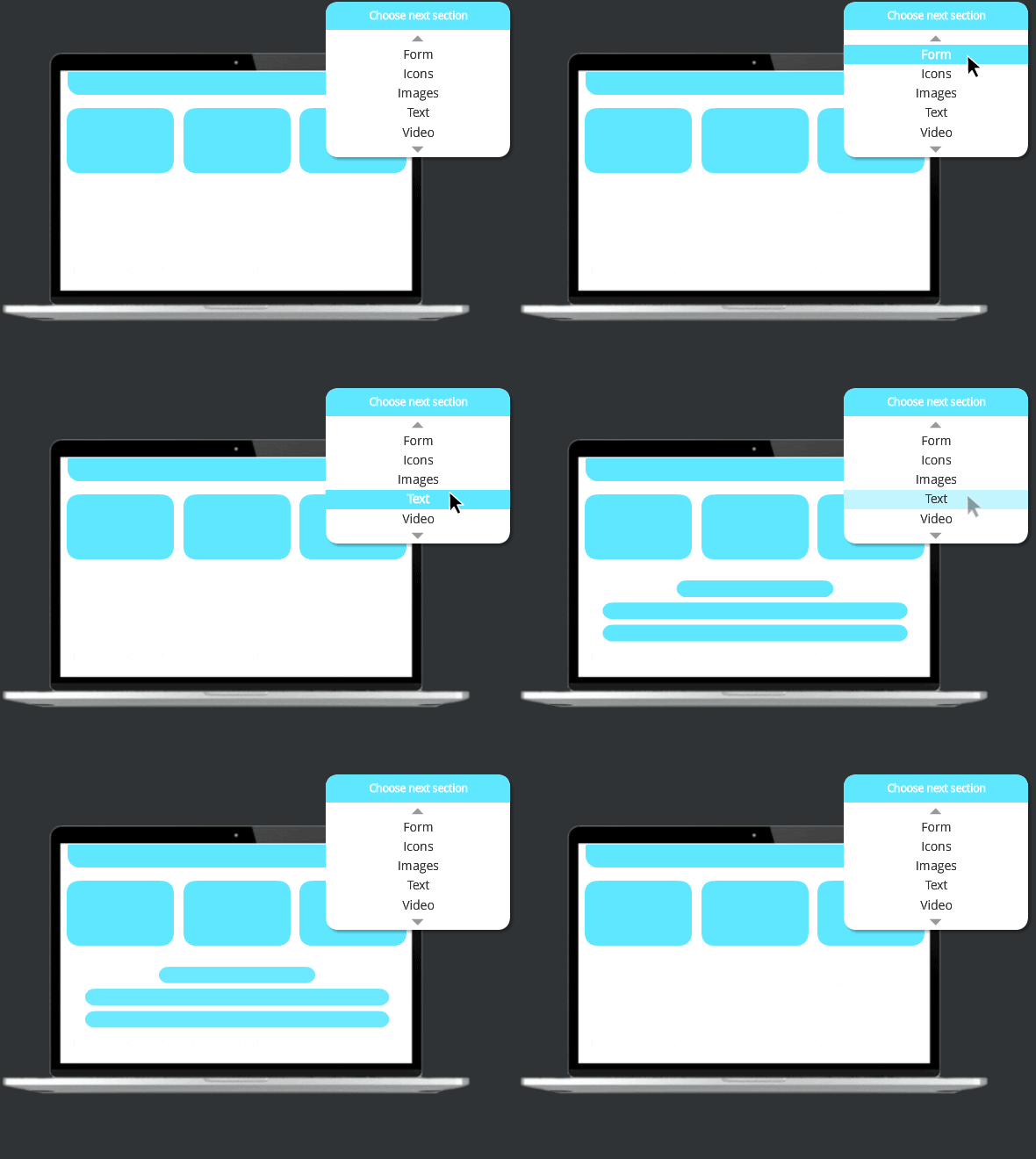
WordPress guide illustration 1

1. Intuitive

Adding and editing elements on your website is simple and intuitive with our customised WordPress interface. Every kind of element can be added, changed, or repositioned quickly and easily to suit your new requirements.

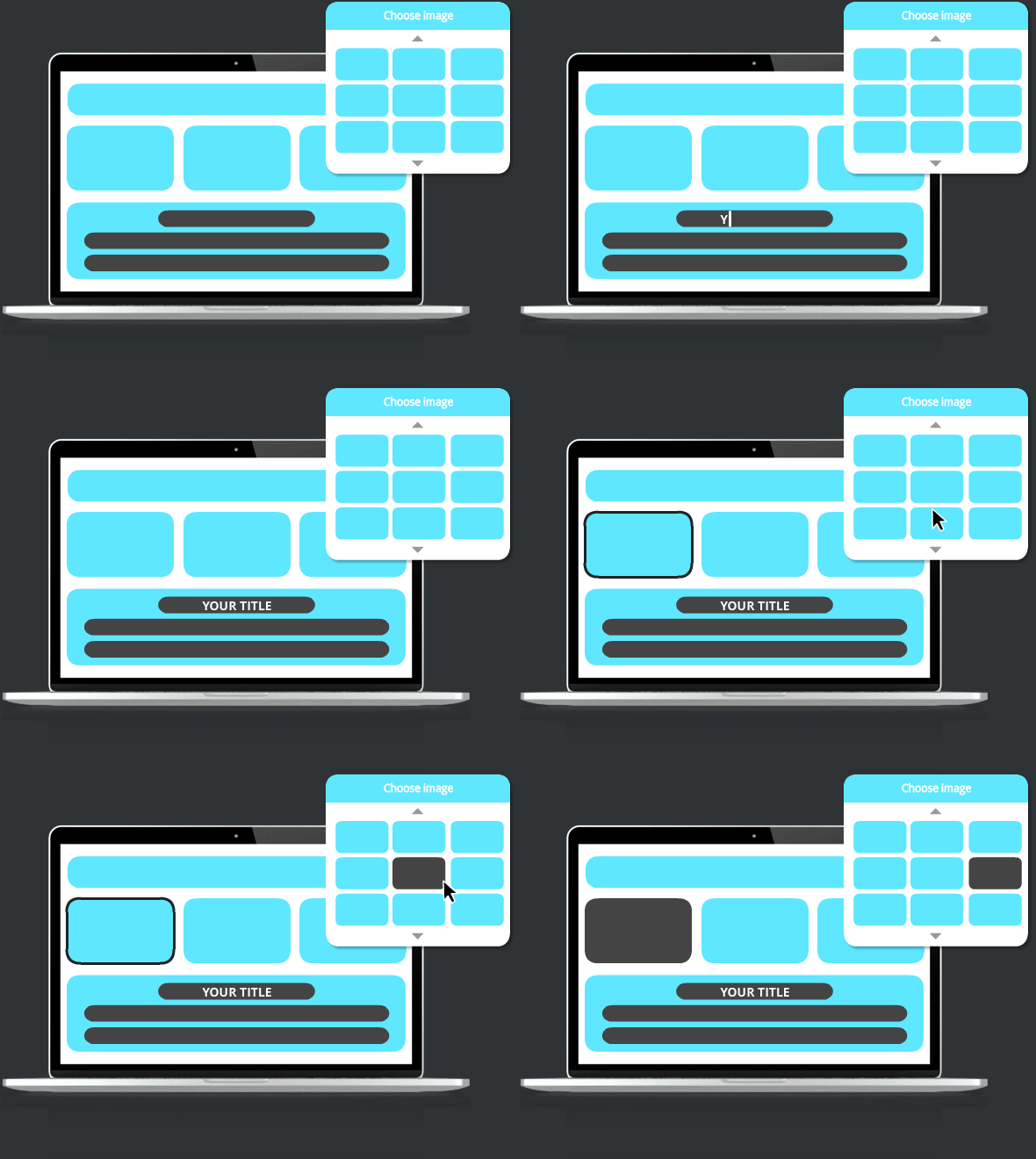
WordPress guide illustration 2

2. Super-easy editing

Whether you’re looking to change an image, reword some text, or add in a new section, we provide full training to enable you to update your website with little or no input from us. 

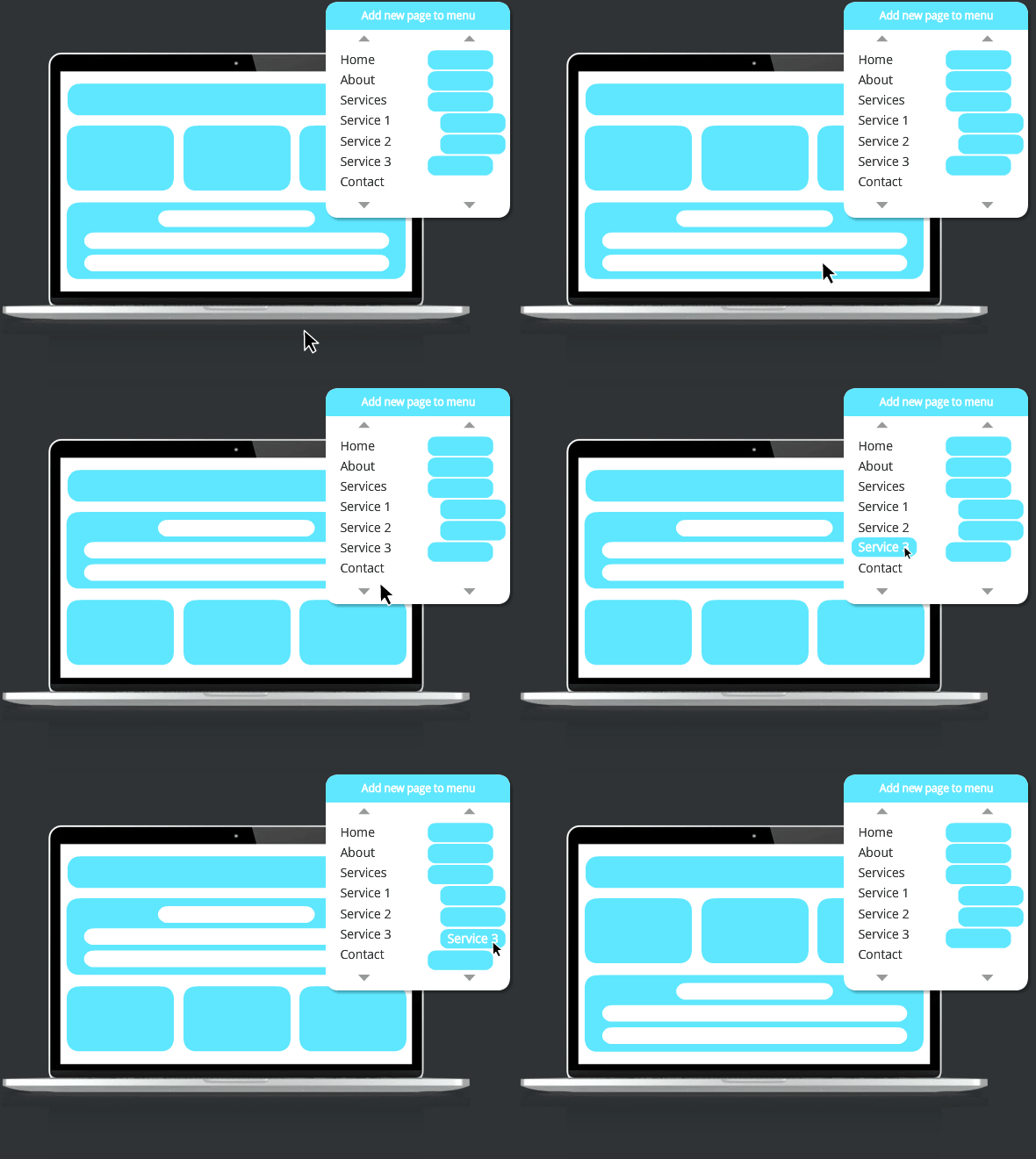
WordPress guide illustration 3

3. Complete flexibility

You can duplicate existing sections or even complete pages in order to provide a template for a new page, then add that to the site menu quickly and easily.

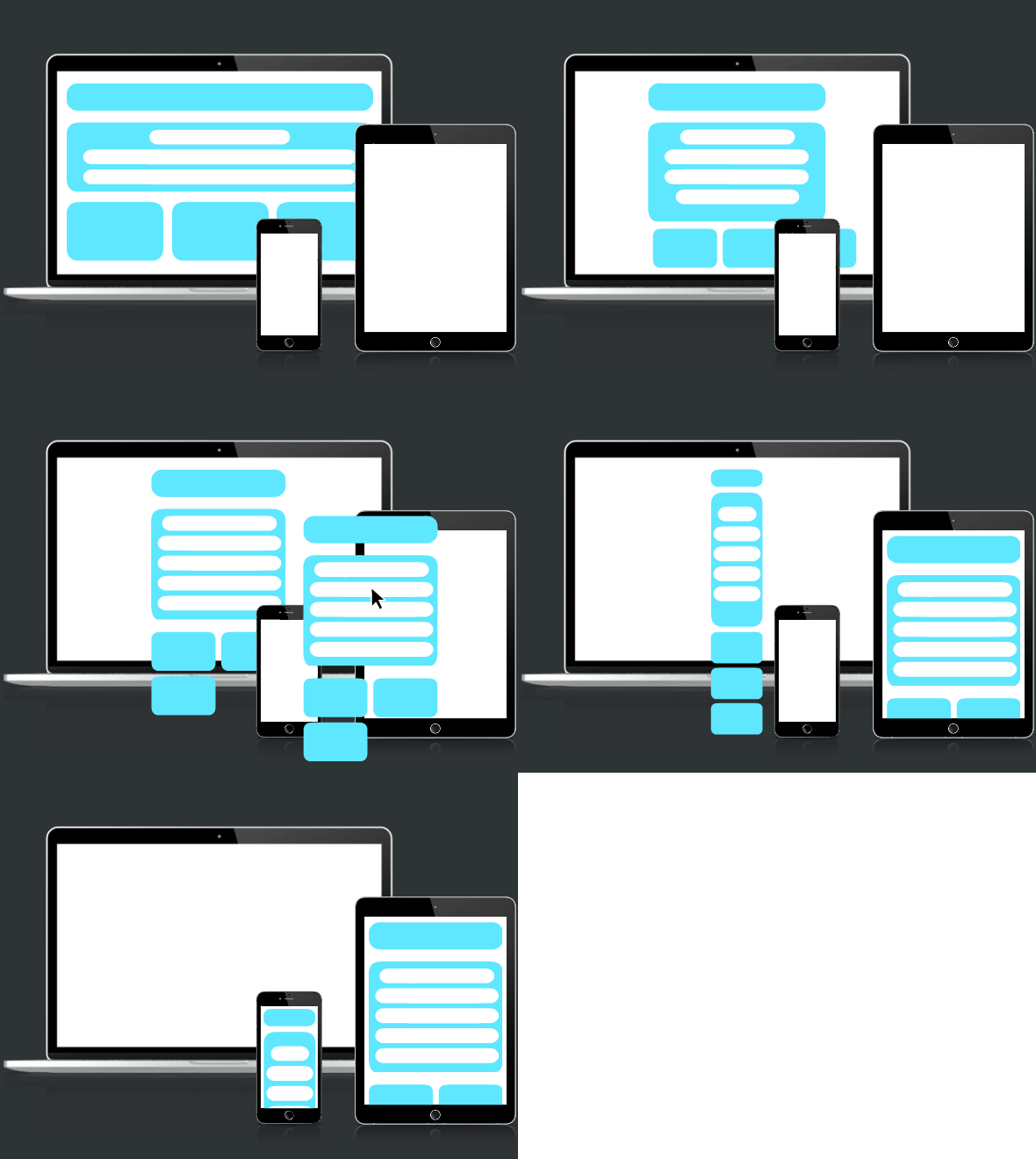
WordPress guide illustration 4

4. Mobile responsive

We design your WordPress website so that it automatically adjusts text sizes, images and layouts to display on different devices, such as tablets, desktop and mobile phones.